When we talk about the "strongest material on Earth," many people still think of diamonds or tempered steel. But in the realm of modern materials science, there is a polymer that has quietly redefined the limits of physics. Ultra-High Molecular Weight Polyethylene (UHMWPE) is not just a plastic; it is a molecular masterpiece. It is pound-for-pound 15 times stronger than steel, yet it is light enough to float on water.
At Huidun UHMWPE, our mission is to harness this molecular potential for industrial, marine, and protective applications. To truly appreciate why our fibers perform the way they do, we need to look past the surface and dive into the microscopic architecture of the polymer itself.
The "Molecular Weight" Factor
The secret of UHMWPE lies in its name: "Ultra-High Molecular Weight." While standard polyethylene (the kind used in plastic bags or bottles) has a molecular mass between 20,000 and 300,000 g/mol, UHMWPE boasts a molecular mass between 3.5 and 7.5 million g/mol.
Imagine a bowl of short pieces of string versus a bowl of strings that are miles long. If you try to pull them apart, the short strings slide past each other easily. However, the incredibly long chains in UHMWPE become so entangled and overlapped that they create a massive amount of intermolecular surface area. This extreme chain length is the primary reason the material can withstand immense tension without breaking.
Gel Spinning: Turning Liquid into Strength
Possessing long molecular chains is only half the battle. To turn this raw polymer into a high-performance fiber, it must undergo a specialized process called Gel Spinning. At our Huidun production facilities, this is a critical stage where science meets manufacturing.
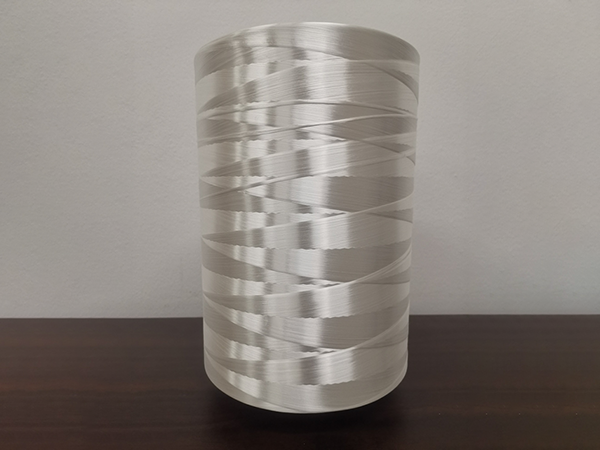
How Gel Spinning Works: The UHMWPE polymer is dissolved in a solvent to form a gel-like state. In this state, the polymer chains are partially untangled. As the gel is extruded through a spinneret, the chains are drawn out and oriented in a single direction. During the subsequent cooling and stretching phases, these chains align themselves perfectly parallel to the fiber axis.
This "highly oriented" structure is what differentiates UHMWPE from other plastics. Because nearly all the molecular chains are aligned in the direction of the fiber, the load is distributed evenly across the entire molecular backbone of the polymer. When you pull on a Huidun UHMWPE fiber, you are effectively pulling against the carbon-carbon bonds themselves.
Crystallinity and Van der Waals Forces
Beyond simple alignment, UHMWPE is highly crystalline. In most plastics, the molecules are messy and "amorphous." In UHMWPE fibers, over 80% of the structure is arranged in a tightly packed crystalline lattice. This density allows for maximum Van der Waals forces— the subtle electromagnetic attractions between molecules—to take hold. While one Van der Waals bond is weak, millions of them acting across a 7-million-unit molecular chain create a bond that is incredibly difficult to rupture.
Energy Absorption: The Ballistic Edge
One of the most remarkable properties of UHMWPE is its ability to absorb and disperse energy. Because the speed of sound through this highly oriented polymer is extremely high, the energy from an impact (like a bullet or a sharp blade) is transferred across the fiber network faster than the material can be penetrated.
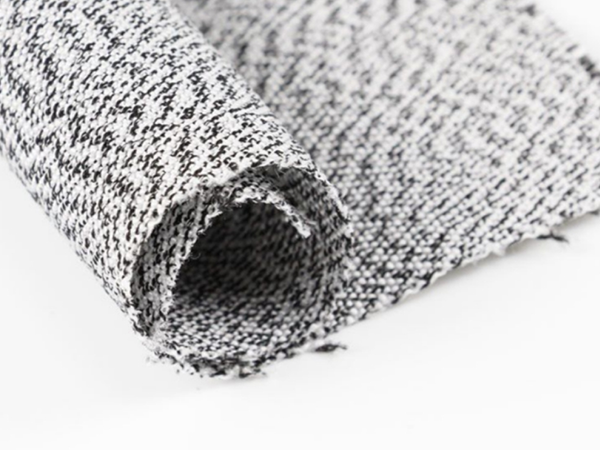
This is why UHMWPE is the material of choice for modern body armor and cut-resistant gloves. It doesn't just stop an object; it catches it by spreading the force across a wide area, reducing "backface deformation" and increasing the survival rate of the wearer. At Huidun, we optimize our fiber consistency to ensure that this energy dispersion is uniform across every batch.
Environmental Immunity
The chemical structure of UHMWPE is fundamentally non-reactive. Since it is composed entirely of carbon and hydrogen in a saturated chain, there are no "weak spots" for chemicals or moisture to attack. It is hydrophobic, meaning it absorbs zero water, and it is immune to the biological degradation that plagues natural fibers. Whether exposed to harsh UV rays in the desert or salt spray in the middle of the ocean, the molecular integrity of Huidun fiber remains unchanged.
Want to see the science in action? Contact the technical team at Huidun UHMWPE today to request a datasheet or a sample for your next project. Explore more at www.huidunuhmwpe.com.
Post time: May-19-2026