When selecting coated abrasives for metal fabrication, engineers and machine operators often question whether flat grain cloth (a flat-woven cloth abrasive backing) is suitable for processing stainless steel. The direct answer is yes—flat grain cloth can be used on stainless steel, provided you select the appropriate abrasive mineral grade, grit size, and cooling bond tailored to stainless steel’s thermal properties.
Achieving uniform satin finishes, removing heavy weld seams, and eliminating surface cross-contamination require strict attention to mechanical compatibility. In this guide, we break down the physical interaction between flat grain abrasive backings and stainless steel alloys, outline best operational practices, and explain how complementary material protection from Huidun keeps production lines running smoothly.
1. Mechanical Behavior: How Flat Grain Cloth Interacts with Stainless Steel
Stainless steel alloys (such as 304, 316, and 430 grades) are tough, highly ductile, and prone to rapid work-hardening under friction. Unlike standard carbon steel, stainless steel retains heat at the grinding interface, which can lead to thermal discoloration (blueing) or grain fracturing if an improper backing or bond is utilized.
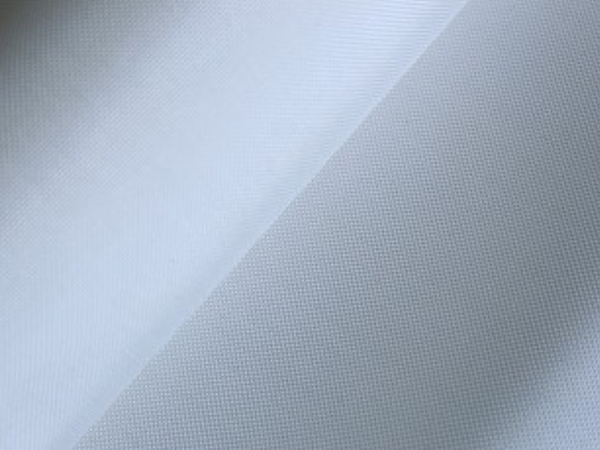
· Backing Structural Stability: Flat grain cloth backings—typically constructed from heavy X-weight or Y-weight woven cotton, polyester, or poly-cotton blends—provide a flat, rigid substrate. This dimensional stability ensures uniform pressure across flat sheet metal plates, box tubing, and flat weld seams.
· Grain Retention & Heat Dissipation: High-grade flat grain cloth products feature synthetic resin bonds and specialized top-size coatings (grinding aids like cryolite). These additives break down friction heat during heavy stock removal, preventing heat damage to the alloy matrix.
· Metallurgical Caution: Never reuse abrasive cloth on stainless steel that has previously been used on carbon steel or iron. Ferrite dust embedded in the cloth backing will transfer to the stainless surface, leading to localized rust pitting over time.
2. Selecting the Right Abrasive Mineral for Stainless Steel
While the flat grain cloth provides structural support, the abrasive mineral determines stock removal speed and surface finish consistency:
| Abrasive Mineral | Stainless Steel Compatibility | Primary Application | Industrial Performance |
| Ceramic Alumina | Exceptional (Self-sharpening micro-structure) | Heavy weld removal & high-pressure grinding | Premium / High-Efficiency |
| Zirconia Alumina | High (Aggressive fracture rate) | Medium stock removal & deburring | High / Standard Industrial |
| Aluminum Oxide | Moderate (Requires active cooling aids) | Light blending, satin finishing & final buffing | Standard Finishing |
| Silicon Carbide | Good (Extremely sharp crystal structure) | Fine surface polishing & non-ferrous work | Specialized Fine Polish |
3. Best Practices for Grinding & Finishing Stainless Steel
To extend abrasive tool life and ensure flawless surface quality when using flat grain cloth belts or discs, implement these operational rules:
1.Control Contact Pressure: Excessive pressure increases friction without improving cutting rate, causing work-hardening. Let the sharp abrasive grain cut naturally under steady, moderate pressure.
2.Utilize Cool-Cutting Grinding Aids: Always confirm that flat grain belts intended for stainless steel feature an active top-size coating to minimize friction heat buildup.
3.Protect Finished Surfaces with Non-Marking Wear Components: During high-volume manufacturing, sliding stainless steel sheets along metal conveyors or machinery tables can induce deep surface scratches. Installing low-friction, non-marking wear plates—such as Huidun UHMWPE liners—along guide rails and transfer tables prevents surface marring and reduces equipment wear.
4. Complementary Industrial Material Protection from Huidun
While flat grain cloth refines metal surfaces, preserving workpiece quality across material transport systems requires tough, low-friction equipment protection. At Huidun, we engineer high-density Ultra-High Molecular Weight Polyethylene (UHMWPE) sheets, chute liners, and custom wear parts engineered to withstand intense abrasion, impact, and harsh industrial environments.
· Upgrade your machinery protection and material flow today. Explore our complete range of UHMWPE engineering plastic solutions at www.huidunuhmwpe.com.
Post time: Aug-27-2026